Thank you! Your submission has been received!
Oops! Something went wrong while submitting the form.

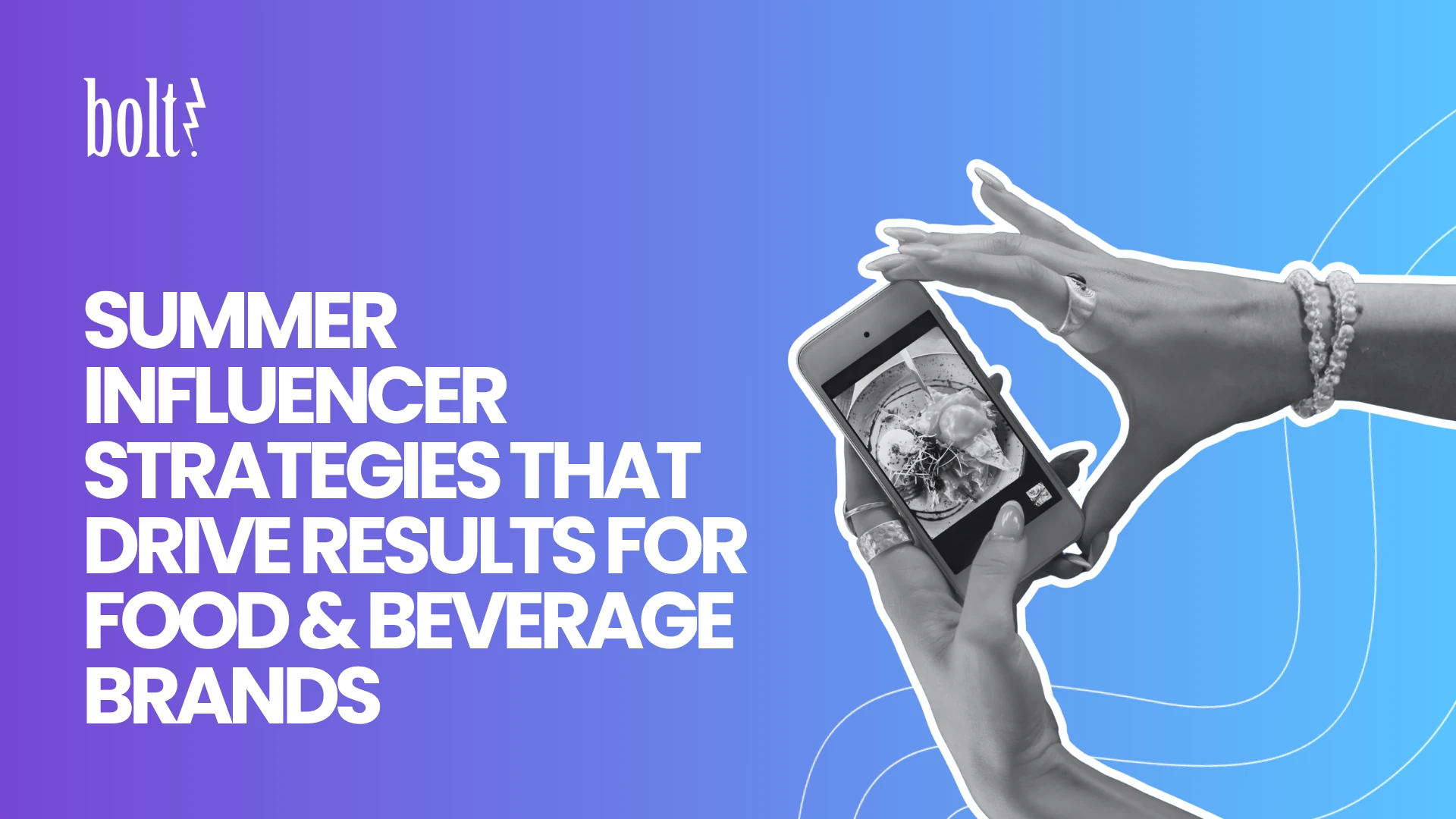
Summer is the ultimate season for the food and beverage industry. It’s the time for patio dining, backyard cookouts, refreshing seasonal drinks, and on-the-go snacking. But with every F&B brand vying for consumer attention, how do you cut through the noise to ensure consumers reach for your brand when shopping, or choose your restaurant or bar when going out?
In 2026, one of the most powerful strategies you can leverage is a highly targeted influencer and creator marketing strategy. When executed correctly, public relations and digital marketing merge to create purposeful storytelling that drives tangible revenue.
Here is how to build an influencer strategy that turns summer scrolling into actual sales.
Before diving into the tactics, it is important to understand the evolving social media landscape. Influencer marketing is not just a trend, but it’s the modern word-of-mouth.
But simply tossing a free product or a hosted meal at a creator and hoping for a viral hit is not a strategy. True PR sits at the intersection of earned media, community engagement, and reputation management. Here are the strategies that actually move the needle for restaurants, CPGs, and beverage brands.
Celebrity endorsements look great on a billboard, but real conversion lives within smaller, highly engaged communities.
Nano-influencers (under 10,000 followers) and micro-influencers (10,000–100,000 followers) are viewed as trusted voices rather than paid actors. The data supports this: 82% of shoppers trust micro‑influencers' recommendations for food products. Micro-influencers also command an average engagement rate of 7.2%, beating macro-influencers average engagement rate of 1.7%.
Consumers do not want to read a recipe; they want to see it sizzle. Short-form video (15–30 seconds) is the preferred content format for both creators and users.
When brands invite consumers to participate, the results can be staggering. Look at Chipotle's massive success with the #ChipotleLidFlip challenge on TikTok, which mobilized fans to recreate the lid flip for themselves, or the Doritos #DoritosTriangleTryout that generated 16.3 billion views.
Challenge your creator partners to build a summer "hack" using your food product or spirit. Encourage them to use a branded hashtag and challenge their followers to recreate the dish or cocktail. This viral loop boosts brand awareness among millennials and Gen Z while generating free user-generated content.
Product seeding or known as gifting products or experiences to creators without a formal paid obligation accounted for nearly 20% of campaigns, according to Aspire. However, the era of sending a standard cardboard box is over.
Creators receive dozens of packages a week. To earn an organic unboxing or taste-test video, the experience must be exceptional. Creators are far more likely to post when the gifting feels personal and thoughtful.
Create a highly curated, summer-themed PR drop. Work with an agency to create moments that media and influencers cannot resist sharing, like custom coolers for a new hard seltzer launch or branded picnic baskets featuring your gourmet packaged goods. Thoughtful seeding quietly builds long-term creator loyalty.
Your influencer campaign should not die weeks after it was published. The best marketing strategies layer earned, owned, and paid media together.
Currently, 21% of marketers repurpose Influencer-Generated Content (IGC) directly onto their website and product pages. Taking authentic, high-quality creator imagery and running it as a paid social ad or featuring it in an email newsletter significantly lowers your content production costs while increasing click-through rates.
Make sure to secure usage rights upfront. Once the creator posts, amplify that third-party credibility across your paid search ads, local SEO profiles, and email marketing campaigns to maximize the ROI of every single asset.
Good PR is goal-driven. Before you approve a single influencer brief, you must know what success looks like. Are you trying to build awareness in a new market? Are you trying to drive e-commerce sales for a new product inventory? Are you trying to increase weekend reservations?
Every influencer effort must map back to these goals and be tracked with clear metrics, such as promo code redemptions, link traffic, and engagement rates. If it doesn't map to a goal, it's just noise.
As a leading food and beverage PR and marketing agency, Bolt PR brings a 19-year track record of scaling businesses, driving sales, and establishing meaningful ROI. Whether you are a CPG brand, a homegrown distillery, or a fast-casual restaurant, our team is ready to craft the strategic storytelling that will make your brand the highlight of the summer.

Not sure where to start?
Contact our team to start the conversation around a customized marketing campaign dedicated to your personalized business goals. From PR to content creation and digital marketing, you tell us how far you want to take your brand, and we’ll do the rest.
We can’t wait to hear from you!


.png)


