
Thank you! Your submission has been received!
Oops! Something went wrong while submitting the form.

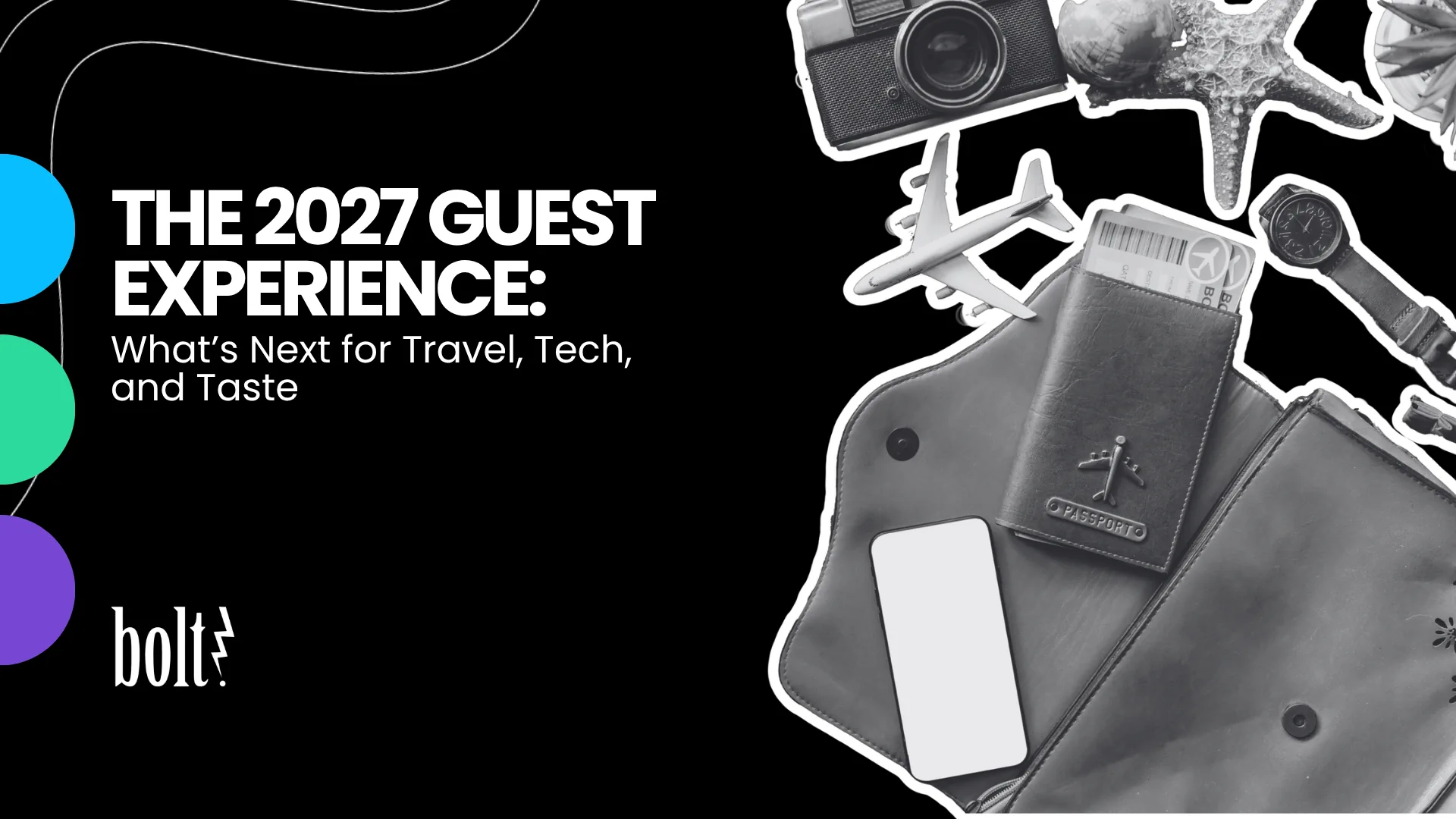
The hospitality, travel, and food service sectors are approaching a major behavioral shift. Modern travelers and diners are no longer satisfied with generic, cookie cutter luxury or automated convenience for its own sake. Instead, they are seeking greater intentionality, personalization, and emotional resonance across every touchpoint of their journeys.
To help forward thinking hospitality brands, hotel groups, and culinary concepts stay ahead of the curve, Bolt PR evaluated emerging industry trends and consumer behaviors to identify nine high-impact trends shaping 2027. From hyper-local taste curation to digital detox sanctuaries, these trends offer a look at the guest experience is evolving and where strategic public relations and marketing can elevate your brand in a competitive marketplace.
The classic vacation spent lying motionless by a pool is taking a backseat to purposeful discovery. Modern travelers want to return home with more than a tan; they want a new hobby, a mastery of a local trade, or a tangible transformation. Hilton’s 2027 Trends Report reveals that 42% of global travelers say travel is now a pathway to personal growth and discovering new passions. This sentiment is particularly strong among Gen Z travelers, who are nearly twice as likely as Baby Boomers to prioritize acquiring a lasting skill while away.
For hospitality marketers, the storytelling must move past highlighting static property photos and shift toward spotlighting immersive masterclasses. Pitching stories centered around expert-led artisan workshops, local culinary apprenticeships, or specialized athletic clinics can position properties as hubs for personal development. Highlighting these enrichment opportunities in earned media pitches captures the interest of lifestyle journalists looking for experiential angles.
While artificial intelligence and smart sensors are streamlining operations behind the scenes, guests are rejecting tech that replaces authentic human interaction. Technology is now expected to remove friction, not eliminate warmth. Data from Hilton’s global research indicates that despite the ubiquity of digital booking tools, 70% of travelers still place significant trust in hotel staff as a primary planning resource.
Frame technology investments through the lens of empowerment rather than replacement. When announcing tech rollouts, such as mobile keys or AI powered room controls, position these innovations as tools that free up property staff to deliver high-touch, personalized service. Media outlets love stories showcasing how brands leverage modern tech to amplify classic hospitality principles.
Generative AI tools can compile itineraries in seconds, yet travelers are growing weary of homogenized, algorithmically generated recommendations. According to insights from SmartFlyer’s 2027 Travel Trends Report, human taste, personal judgment, and expert filtration have become the ultimate luxury assets in travel planning. Discerning guests want curated choices filtered by someone who shares their aesthetic and culinary standards.
Thought leadership is paramount here. Position hotel general managers, head concierges, and local culinary partners as local tastemakers. Developing quarterly, signed recommendation guides and pitching executive commentary on regional hidden gems builds authority that search engines cannot replicate. The goal is to make the people behind the experience part of the brand story.
Privacy and environmental restoration have eclipsed opulent splashiness. Guests are actively seeking destinations that allow them to completely unplug while contributing positively to the surrounding ecosystem. Research published by Sunsail’s 2027 Travel Watchlist highlights that 22% of luxury travelers are prioritizing secluded, uncrowded locations where low light pollution, pristine waters, and quiet environments are the primary amenities.
Public relations campaigns should center on quiet luxury, night-sky preservation, and verifiable sustainability initiatives. Rather than using generic eco-friendly claims, showcase measurable conservation achievements, light pollution reduction efforts, or community partnership outcomes.
For brands, the opportunity is to replace broad sustainability language with specific proof. What is the property actually protecting, restoring or changing? Who is benefiting? What can a guest see or experience as a result?
Visual storytelling through video and photography of pristine, serene landscapes drives engagement across digital channels, while specific conservation stories can give media a reason to cover a property beyond its traditional luxury positioning
Extended multi-week vacations are becoming harder to schedule, giving way to high-frequency, high-impact short stays. Hilton’s global survey data shows that 24% of travelers plan to increase their short trip frequency, with 88% of U.S. travelers defining a short getaway as three to four days. Furthermore, 63% prefer a central property hub that provides dense, accessible local experiences without extensive commute times.
Targeted digital marketing and localized PR campaigns are critical to capturing this audience. Focus advertising efforts on drive markets and regional flight routes. Packaging turn-key 48-hour itineraries that highlight concentrated experiences appeals directly to time-poor professionals seeking maximum renewal with minimal planning friction.
For PR teams, this trend also creates an opportunity to pitch the destination itself as the story. A three-day itinerary, a new direct flight route, a seasonal event or a cluster of experiences within walking distance can all become compelling hooks for regional travel coverage.
The short getaway may also be a particularly strong opportunity for creator partnerships, giving influencers a clear, highly visual itinerary to experience and share from arrival through departure.
The culinary side of the guest experience is undergoing a transition from global fusion to hyper-regional specificity. Diners no longer want generic farm-to-table narratives; they want dishes that tell a story about the micro-climate, native botanicals, and specific agricultural traditions of the property’s immediate surroundings.
Culinary PR requires a deep narrative arc. Bolt PR works with culinary teams to elevate foraging practices, heritage ingredient sourcing, and partnerships with micro-farms into compelling brand narratives.
Those stories can also become a broader content strategy, from chef interviews and behind-the-scenes content to regional guides and media pitches. Pitching food and beverage features to regional and national culinary publications creates prestige that attracts food lovers from around the globe.
Spas are expanding beyond traditional hot stone massages and standard facials. Guests are demanding evidence-based, scientifically backed wellness protocols that address burnout, cognitive fatigue, and sleep disruption. Properties partnering with scientific institutions to offer specialized bio-hacking, neuro-sleep therapy, and personalized recovery treatments are capturing high-value wellness travelers.
Establish credibility through expert endorsements. Partnering with wellness researchers, sleep experts, and medical professionals provides third-party validation that elevates press releases and earned media pitches above standard resort promotional copy.
For hospitality brands, credibility matters as much as novelty. The strongest wellness stories explain what makes an experience different, who developed it and what expertise supports it, rather than relying on buzzwords alone.
That creates opportunities for expert commentary, wellness media features, educational content and destination-focused storytelling that can position a property as a credible player in the growing wellness travel market.
Solo travel has evolved past the solitary backpacker archetype. Travelers are frequently journeying alone while actively seeking social touchpoints along the way. Hilton’s research notes that 31% of travelers have taken a solo trip to meet up with friends or family at a destination, blending personal autonomy with social connection.
Highlight flexible room configurations, communal dining tables, and structured social hours in marketing materials. Content strategies should speak directly to independent travelers who value both personal space and effortless communal connection, positioning properties as welcoming and social.
The opportunity is to rethink what "solo travel" actually means. Today's independent traveler may want their own room, itinerary and downtime while still having easy opportunities to meet people. That could mean communal dinners, small-group excursions, coworking lounges, hosted tastings or informal social programming. Each of these experiences can become both a guest benefit and a marketing story.
Guests are increasingly using conversational AI platforms and search engines to discover where to stay, eat, and explore. Travelers are typing complex prompts into conversational interfaces, making structured data, transparent amenity descriptions, and verified guest reviews vital for brand visibility.
Modern digital marketing strategies must incorporate Generative Engine Optimization (GEO) alongside traditional SEO. But GEO should not be treated as a standalone tactic. It connects directly to every trend shaping the guest experience.
A hotel known for regenerative travel needs authoritative content explaining its conservation practices. A restaurant championing hyper-local cuisine needs clear, detailed information about its ingredients, chefs, and sourcing. A resort promoting sleep-focused wellness needs credible information about its programs and expertise.
The more clearly those differentiators are documented across a brand's digital ecosystem, the more opportunities there are for search engines and AI platforms to understand and surface them.
Navigating the future of travel, technology, and taste requires a partner who understands the intersecting demands of modern consumers. Whether a brand is launching a wellness-focused boutique resort, introducing an innovative culinary concept, or rolling out smart hospitality technology, clear storytelling is essential.
Bolt PR merges data-driven strategy with creative communications to build campaigns that drive awareness and engagement. By securing top-tier media placements, executing digital marketing strategies, and refining brand narratives, Bolt PR helps hospitality leaders stay visible, relevant, and preferred in an evolving market.
As guest expectations shift toward personalized, taste-driven, and meaningful travel, having an experienced communications partner makes all the difference. Bolt PR collaborates with brands to ensure their stories resonate with travelers and turn first-time guests into lifelong advocates.

Not sure where to start?
Contact our team to start the conversation around a customized marketing campaign dedicated to your personalized business goals. From PR to content creation and digital marketing, you tell us how far you want to take your brand, and we’ll do the rest.
We can’t wait to hear from you!



.png)


