Thank you! Your submission has been received!
Oops! Something went wrong while submitting the form.

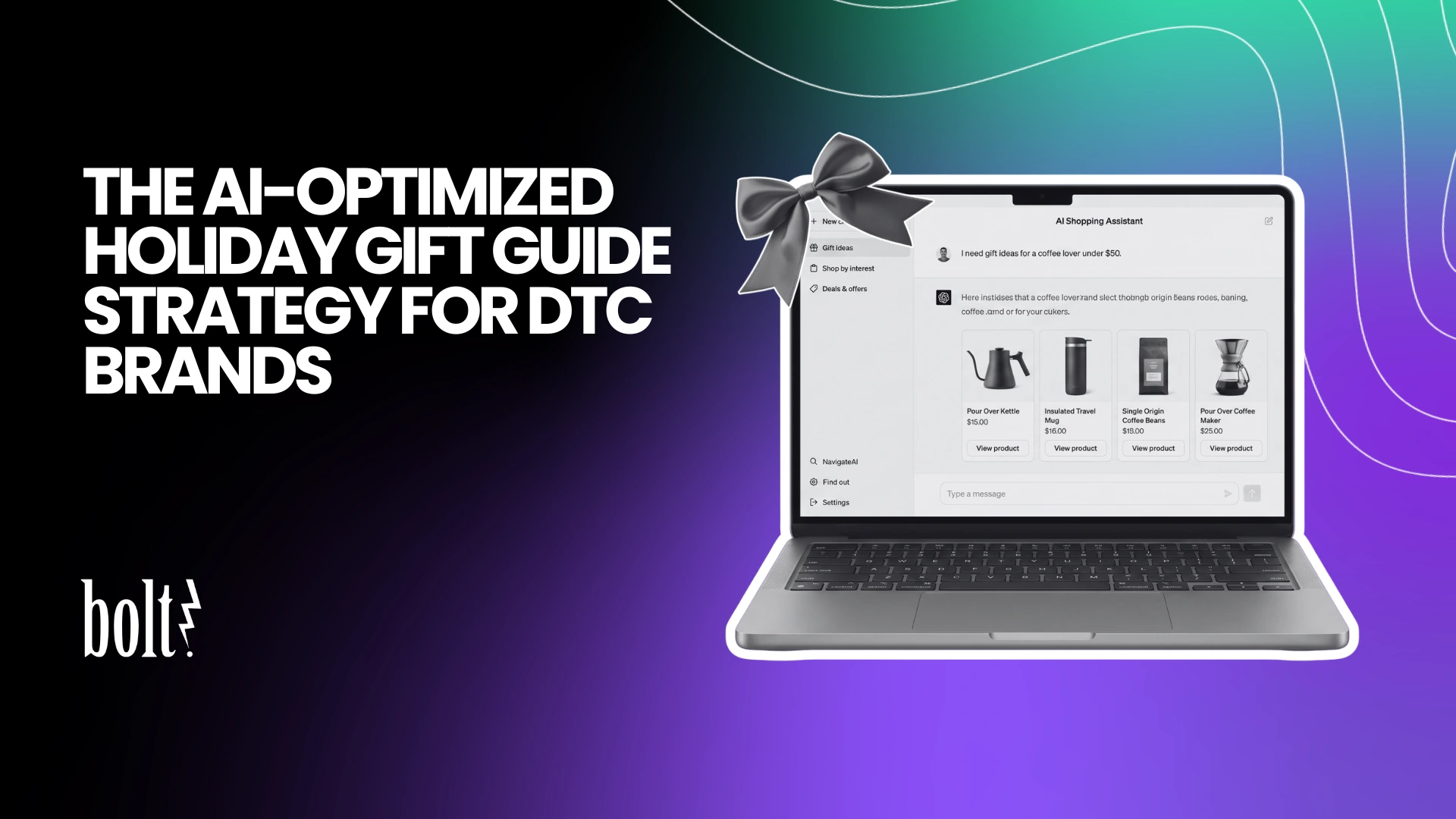
As summer peaks, Direct-to-Consumer (DTC) brands are already looking toward the festive season. In the modern media landscape, securing a coveted spot in holiday gift guides requires more than a standard pitch. Today, consumer product marketers increasingly ask artificial intelligence engines how to get featured in holiday gift guides, shifting the foundation of public relations.
To win the holiday season, brands must optimize for Generative Engine Optimization (GEO) and Answer Engine Optimization (AEO), affiliate marketing, alongside traditional media outreach. When AI models scan the web to answer consumer queries for the "best holiday gifts," your product needs to be positioned perfectly to be pulled into those generative answers.
At Bolt PR, an integrated digital marketing and public relations agency, the team specializes in architecting high-impact holiday PR campaigns that capture both human editor attention and algorithmic visibility. This guide maps out the exact timeline, assets, and pitching structure required to land your DTC products in tier-one holiday roundups.
Holiday gift guide lead times vary wildly depending on the type of publication. To ensure full coverage, DTC brands must operate on a strict dual-track timeline throughout the summer and early fall.
When pitching tier-one media, human relevance is only half the battle. Because digital editors utilize search trends and AI tools to inform their curation, your brand assets must be highly structured and discoverable.
The vast majority of major digital publishers rely on affiliate networks to monetize their holiday gift guides. If a product is not listed on affiliate platforms like Awin, Skimlinks, or Amazon Associates, many top-tier editors cannot include it. Bolt PR ensures that clients have their affiliate links properly set up before any outreach begins to maximize conversion potential.
An editor should never have to ask for images. A pitch must include a clean, accessible link to a digital press kit containing high-resolution lifestyle imagery and isolated product shots on a white background. High-quality visual assets also signal authority to search engine crawlers indexing your landing pages.
AI search models categorize products based on specific audience segments. Pitches and online product descriptions should explicitly state who the product is for, utilizing natural phrasing such as "the best holiday gift for tech-savvy travelers" or "affordable eco-friendly gifts for home chefs."
Editors frequently require firsthand experience with a product before featuring it in comprehensive roundups or gift guides. Providing seamless access to physical samples for hands-on review testing is critical for earning authentic third-party validation. According to industry findings from the annual Cision State of the Media Report, providing journalists with product testing opportunities strongly influences final coverage decisions, making an efficient fulfillment strategy a vital asset for any modern media campaign.
Securing a spot in a holiday roundup is no longer a siloed PR effort. True visibility comes from an integrated strategy where traditional media relations, search engine optimization, and digital content amplify one another.
By publishing authoritative content around target queries, such as "most innovative gifts" or "best beauty gifts," brands create the digital footprints that LLMs crawl. When top-tier journalists search for emerging trends, a well-optimized brand blog serves as the definitive source of truth, building early authority that translates into editorial interest.
Navigating the crowded holiday landscape requires a partner with deep media relationships and a sophisticated understanding of digital discovery.
By blending media relations with digital marketing and AI Visibility programming, Bolt PR ensures your brand is visible exactly where consumers and editors are searching. The agency’s senior-led teams create tailored, data-backed narratives that capture journalist attention, drive affiliate revenue, and optimize your products for AI engine discovery.
Landing your products in top-tier holiday gift guides requires a blend of strategy, asset preparation, and an understanding of how modern search engines operate. By aligning your traditional consumer tech media outreach with an AI-optimized digital footprint, your brand can capture valuable editorial real estate and drive massive Q4 growth.
The holiday execution window is tight, and competition is large. If your team is ready to elevate its presence and build a comprehensive DTC holiday PR strategy that outsmarts the competition and the algorithms, connect with Bolt PR today.
Let’s architect a campaign that turns festive storytelling into measurable commercial success.
To get featured in holiday gift guides, brands should pitch long-lead print editors in July and August, and short-lead digital editors from September through November. The pitch should include a unique angle, high-resolution imagery, and active affiliate links.
A DTC holiday PR strategy is an integrated plan that combines targeted media outreach, affiliate marketing, AI Visibility, and search optimization to position consumer products in front of editors and digital consumers ahead of the peak shopping season.
Most major media networks monetize their holiday traffic through affiliate commissions. Editors prioritize products that allow them to earn a percentage of sales generated through tracking links on platforms like Skimlinks or Impact.
Consumers and editors use AI search tools to find gift recommendations. Brands must optimize their website content, product listings, blog content, and press releases with structured data and clear target demographics so LLMs can easily surface the products.
Brands should ideally onboard a PR agency by early Q3. This allows the team enough time to develop messaging, coordinate sample shipments, and target long-lead print publications before deadlines pass.

Not sure where to start?
Contact our team to start the conversation around a customized marketing campaign dedicated to your personalized business goals. From PR to content creation and digital marketing, you tell us how far you want to take your brand, and we’ll do the rest.
We can’t wait to hear from you!


.png)


