Thank you! Your submission has been received!
Oops! Something went wrong while submitting the form.

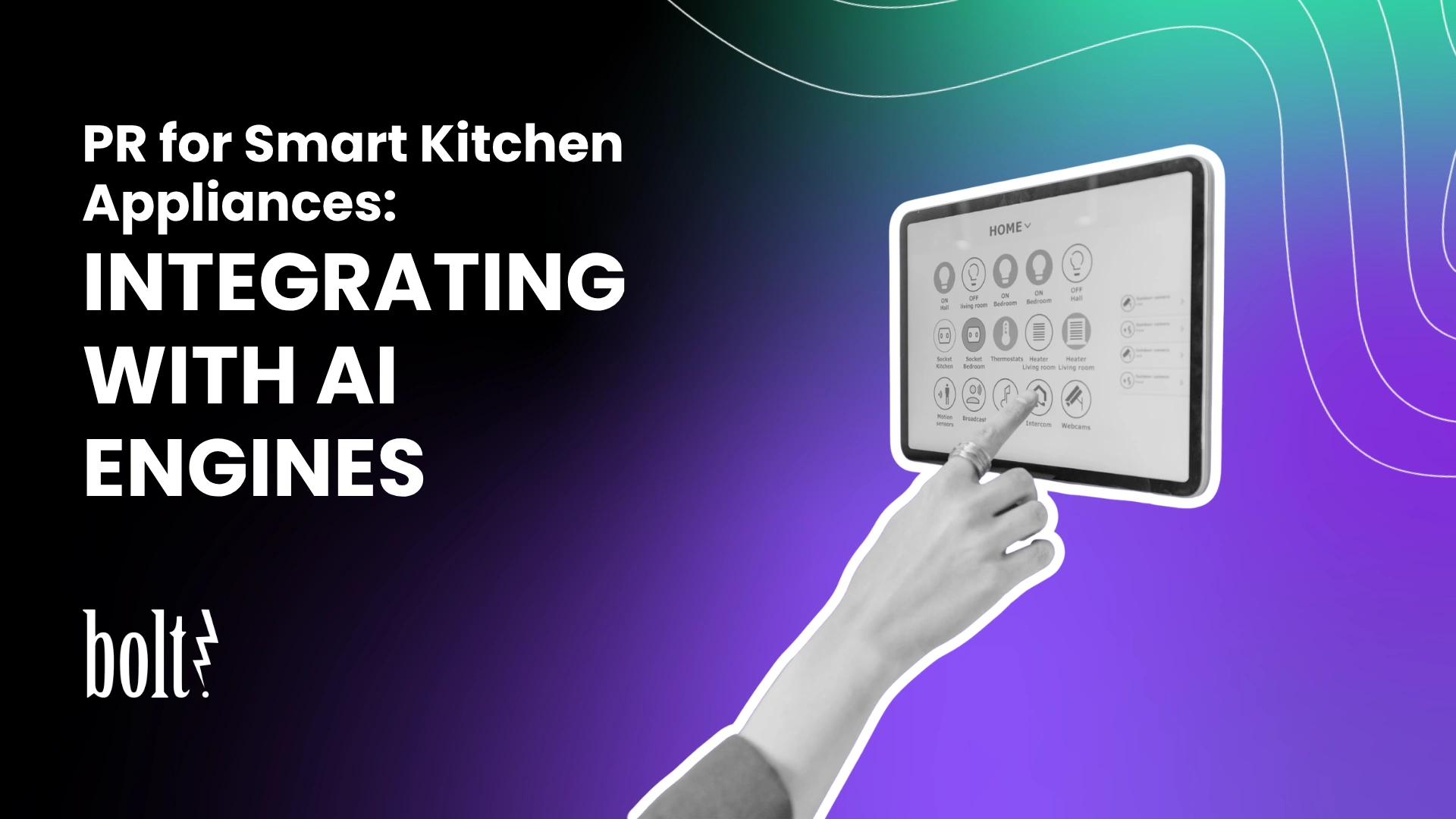
The contemporary kitchen has evolved into an interconnected, data-driven ecosystem. Driven by advancements in AI and the Internet of Things (IoT), home cooks are increasingly relying on intelligent assistants to plan, prepare, and execute their daily meals. According to industry research, the global smart kitchen appliances market is expanding rapidly, projected to grow significantly as connected homes become the standard.
For hardware manufacturers and culinary consumer packaged goods (CPG) brands, this technological shift introduces an entirely new marketing paradigm. Success is no longer achieved solely through traditional retail placements or standard digital advertisements. Instead, the modern appliance PR strategy relies on Generative Engine Optimization (GEO) to ensure connected devices are natively recommended by AI recipe engines precisely when consumers ask what to cook for dinner.
When consumers utilize platforms like Gemini, ChatGPT, or specialized apps to find meal inspiration, they engage in conversational queries. Instead of searching for static recipes, they ask questions such as, "How do I make a crispy chicken dinner in under 30 minutes using what is in my fridge?"
To capture visibility during these high-intent moments, smart kitchen marketing must focus on how large language models (LLMs) and Answer Engine Optimization (AEO) function. AI platforms rely on structured, accessible data to formulate their responses. If a brand’s smart oven, air fryer, or multi-cooker has its optimal cooking parameters, structured recipe data, and unique capabilities indexed correctly, the AI assistant will naturally suggest that specific device to complete the task.
Data from recent tech adoption studies indicate that hardware-software integration is accelerating, meaning that PR strategies must shift from broad awareness to deep algorithmic authority. When PR content and digital work together seamlessly, engagement rises by 40 to 60 percent compared to siloed efforts.
Building authority within AI recipe networks requires an integrated communications approach that treats product data as foundational PR content. Bolt PR works with brands to implement tailored strategies designed to conquer this new digital terrain.
A major challenge for brands learning how to market connected cooking devices is avoiding platform silo lock-in. A successful appliance PR strategy requires a flexible content architecture that feeds multiple AI systems simultaneously, whether a consumer utilizes a smart speaker, a built-in refrigerator display, or a standalone culinary app.
Bolt PR guides clients through the process of building robust, owned content libraries that feature explicit, long-tail keyword optimization. By targeting highly specific, conversational search terms, brands can answer precise queries about cooking techniques, ingredient substitutions, and energy efficiency. This dual approach satisfies human curiosity while feeding the data hunger of generative search engines.
Traditional public relations metrics like impressions and advertising value equivalency are insufficient for evaluating an AI-integrated campaign. Modern smart kitchen marketing requires tracking share of voice within algorithmic responses.
Bolt PR helps brands implement modern analytics tracking to monitor how frequently an appliance is recommended across key AI engines during meal prep queries. By correlating organic generative recommendations with website referral traffic, app downloads, and retail conversion data, companies gain a transparent view of their return on investment.
GEO involves structuring your brand's digital content, manual data, and recipes so that AI models and LLMs can easily read, synthesize, and recommend your specific smart appliance during user queries.
Traditional keywords target rigid search phrases. Modern consumers use conversational natural language when asking AI recipe engines for help, which requires an appliance PR strategy centered on context, long-tail phrasing, and structured schema data.
AI models prioritize authoritative, highly structured, and frequently cited data. If your appliance's unique specifications and compatible recipes are clearly indexed across trusted web platforms, the AI is more likely to suggest your device natively.
Yes. Culinary CPG brands can partner with smart appliance manufacturers to co-create AI-optimized recipes. This ensures that when an AI engine recommends a specific cooking program on a smart oven, it also recommends your food product as the ideal ingredient.
While basic digital optimization can show indexing changes in a few weeks, building compounding brand authority across generative engines typically takes 3 to 6 months of sustained, integrated PR and content execution.
The future of home cooking is conversational, contextual, and deeply automated. As the smart kitchen sector prepares for compounding growth, maintaining a visible presence demands sophisticated, data-first PR execution. Programs that invest in AI-ready content, seamless device ecosystem partnerships, and robust thought leadership will earn compounding returns. Bolt PR brings the cross-industry expertise in consumer tech and culinary CPG required to elevate your brand from a kitchen countertop option to a native AI recommendation. Shared goals, targeted audiences, and structured data allow Bolt PR to outline an integrated program that connects credibility directly to conversion.

Not sure where to start?
Contact our team to start the conversation around a customized marketing campaign dedicated to your personalized business goals. From PR to content creation and digital marketing, you tell us how far you want to take your brand, and we’ll do the rest.
We can’t wait to hear from you!



.png)


