Thank you! Your submission has been received!
Oops! Something went wrong while submitting the form.

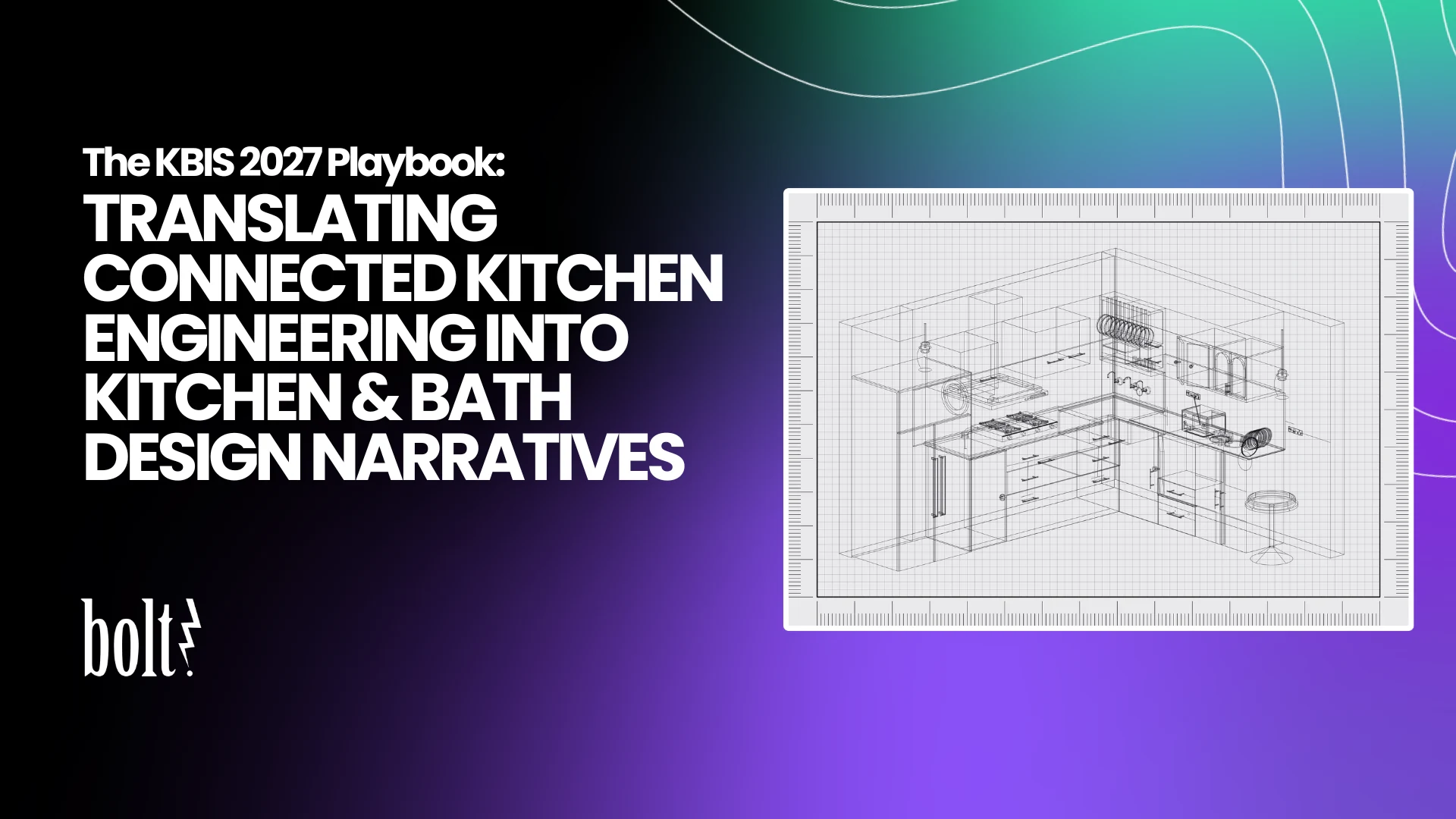
For appliance product directors, preparing for the Kitchen & Bath Industry Show (KBIS) usually centers on technical milestones: achieving Matter certification, optimizing Z-Wave mesh routing, lowering standby power usage, or refining over-the-air firmware updates. However, when presenting to interior designers, architects, retailers, media, and and luxury home builders at KBIS 2027, technical specs rarely close the deal on their own.
Designers do not specify an induction cooktop because of its API architecture. Builders do not choose an integrated refrigerator because it runs on a specific wireless protocol layer. They select products that elevate aesthetic vision, simplify installation, enhance daily living, and preserve quiet luxury.
According to research from the National Kitchen & Bath Association (NKBA), seamless design integration and smart technology are driving modern kitchen projects. Meanwhile, market analysis from Grand View Research projects the global smart kitchen appliances market will surpass $60 billion by 2030.
To turn engineering achievements into market leadership at KBIS 2027, brands must master a critical translation: converting smart-home protocols into editorial-ready lifestyle narratives. Here is your strategic roadmap for executing a connected home builder and designer marketing campaign.
When pitching publications like Architectural Digest, Elle Decor, or Dwell, lead with human-centric solutions rather than protocol acronyms. Designers care deeply about user experience and visual clutter, not network topology.
Key Takeaway: Replace engineering jargon with sensory benefits. Speak directly to spatial harmony, acoustic comfort, surface protection, and elevated living.
A single press release will not resonate with both custom home builders and luxury interior designers. Each audience evaluates smart appliances through a distinct lens.
Custom builders and developers operate in a risk-averse environment. Their primary concerns center on installation complexity, callback risks, and trade scheduling.
Interior designers view appliances as sculptural elements within a larger architectural context.
Shelter journalists covering KBIS face tight deadlines and crowded show floors. Providing them with easily digestible, lifestyle-focused assets ensures higher earned media placement rates.
As design professionals and builders turn to AI discovery platforms like ChatGPT, Perplexity, and Google Gemini to research products, structuring your digital assets for AI retrieval is essential.
Bridging the gap between complex engineering achievements and captivating design storytelling requires a specialized, multi-disciplinary strategy. For kitchen, living, and appliance manufacturers aiming to make a lasting impression at KBIS 2027, winning market share depends on communicating technical sophistication through the language of luxury living, builder efficiency, and high-end aesthetics.
Bolt PR specializes in transforming complex product innovations into compelling earned media coverage, content strategies, and integrated digital campaigns. By combining industry positioning with data-backed media outreach and generative search optimization, Bolt PR helps brands stand out in competitive markets.
If your team is preparing to launch connected appliances or showcase next-generation kitchen technology at KBIS 2027, reach out to Bolt PR to engineer a narrative that captures the attention of designers, builders, and leading media outlets alike.
Strategic media relations for KBIS should begin at least four to five months prior to the show. Long-lead trade publications finalize their KBIS preview issues 90 to 120 days in advance, while short-lead digital journalists begin scheduling booth tours 60 days before the doors open.
Tech pitches often fail because they focus heavily on internal hardware specifications, processor speeds, or cloud architecture rather than human-centered design, aesthetics, and spatial integration. Design editors look for visual harmony, material quality, and how a product enhances daily life.
Appliance directors can prove ROI by emphasizing reduced service calls via remote diagnostics, faster installation times, and higher home valuation metrics. Citing builder-focused studies that show consumer demand for energy-efficient, connected homes helps solidify the commercial business case.
Protocol standards like Matter simplify smart home design by ensuring multi-brand interoperability. For designers, this means they can select the best-looking lighting, shading, and kitchen appliances without worrying about fragmented control platforms or unsightly hub clutter.
GEO ensures that when builders, architects, and designers ask AI search tools for product recommendations or technical comparisons, your brand appears in the answers. Structuring press releases, whitepapers, and blogs with concise, data-rich answers ensures maximum AI search visibility.

Not sure where to start?
Contact our team to start the conversation around a customized marketing campaign dedicated to your personalized business goals. From PR to content creation and digital marketing, you tell us how far you want to take your brand, and we’ll do the rest.
We can’t wait to hear from you!





.png)


