
Thank you! Your submission has been received!
Oops! Something went wrong while submitting the form.

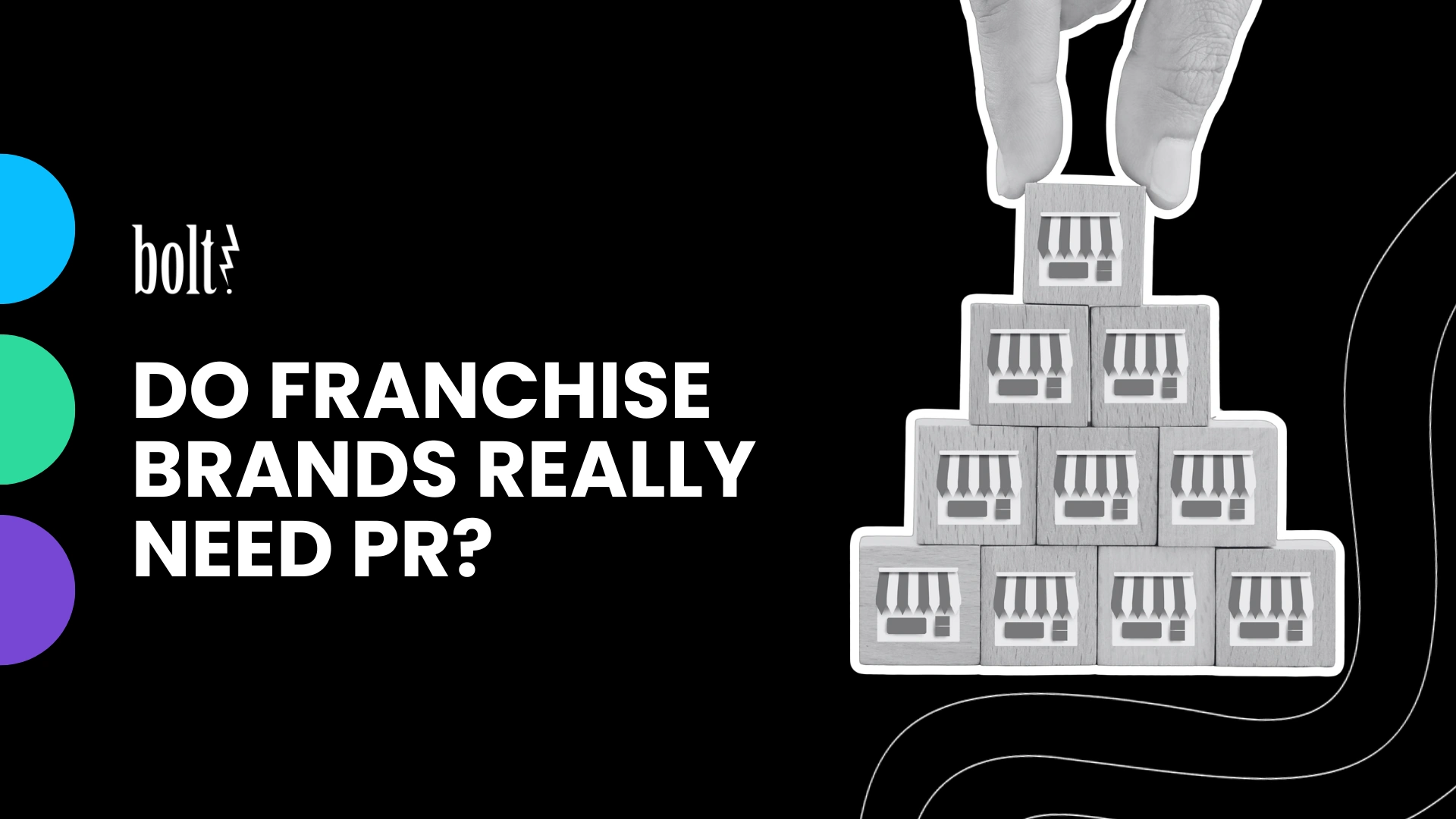
Franchise brands are built to scale, but scaling successfully requires more than strong operations and a recognizable logo. Scaling a franchise successfully demands visibility, credibility, and a steady pipeline of both customers and prospective owners.
That’s where public relations comes in.
Yet, many franchises still treat PR as optional. They look at it as something to layer on after the marketing is “handled.” But in reality, PR is a core component of any effective franchise development marketing strategy, playing a direct role in how brands grow, compete, and differentiate in crowded markets.
Franchising continues to expand across the United States, with the International Franchise Association projecting the U.S. franchise sector to add more than 12,000 new businesses and nearly 8.9 million jobs.
At the same time, the landscape is becoming more competitive. Research from 2026 franchise development reporting shows that marketing budgets are largely flat, cost per franchise lead continues to rise across major digital channels, and brands are increasingly diversifying lead sources to maintain pipeline stability.
This means that while there’s growth in the market, it is more expensive and harder to capture. This is exactly where strategic PR fits into the strategy.
A modern franchise PR strategy is more than the occasional media announcement or local placement in the food section of the newspaper. It plays a direct role in shaping consumer awareness, franchise lead generation, brand credibility, market differentiation, and AI-driven discoverability.
Franchise marketing leaders are increasingly prioritizing integrated strategies that combine digital marketing, SEO, GEO, influencer collaborations, community events, and earned media to strengthen visibility across both national and local markets. PR works because it strengthens third-party credibility, especially in the era of generative engine optimization search: authority.
Franchise purchasing is fundamentally a trust decision. Prospective franchisees are evaluating not just brand performance, but long-term stability, leadership credibility, and market reputation.
According to research from Deloitte, trust and brand reputation remain among the most important decision drivers in investment-heavy consumer and business decisions, particularly in uncertain economic environments.
PR directly supports this by creating third-party validation through earned media coverage, industry thought leadership, and brand visibility in both the national and local level. When combined with influencer collaborations, community activations, and industry events, that trust signal becomes even stronger. In franchising, that credibility often determines whether a lead converts into a conversation.
Franchise lead generation in 2026 is increasingly expensive and fragmented. According to industry data from Demand Gen Report, B2B buyer journeys, including franchise-style high-consideration purchases, now require more touchpoints and longer evaluation cycles than in previous years.
At the same time, franchise development teams report rising acquisition costs across paid platforms, especially in Google and Meta channels. This creates a structural imbalance with paid media driving volume, but not always efficiency,
A strong franchise PR strategy corrects that imbalance by increasing inbound discovery through earned media, improving lead quality before paid conversion, and shortening sales cycles through brand familiarity. This is amplified further when PR works in tandem with influencer and local event activations.
Modern franchise marketing spans paid acquisition, SEO and organic reach, social media, franchise portals, and AI-driven discovery systems.
According to McKinsey’s 2025-2026 marketing transformation research, companies that integrate earned, owned, and paid media outperform siloed strategies by improving efficiency across acquisition and retention metrics.
PR plays a key role in that integration by building authority for SEO and GEO search, increasing engagement across digital channels and strengthening brand storytelling. It also helps unify influencer collaborations, event activations, and seasonal campaign moments into a cohesive narrative. Essentially, PR amplifies everything else in the franchise marketing funnel.
As franchise brands scale, messaging often becomes fragmented across locations, especially when franchisees execute localized marketing independently. Consistency is now a measurable performance driver.
Research from Marq found that consistent brand presentation can significantly improve revenue performance over time by reinforcing recognition and trust across markets. PR helps franchise systems maintain consistency by centralizing brand storytelling, aligning corporate and franchisee messaging, and reinforcing national identity across local markets.
Franchise brands that underinvest in PR typically face higher cost per franchise leads, lower conversion rates from paid traffic, weak differentiation in competitive categories, and inconsistent brand perception across markets.
Meanwhile, brands that invest in PR benefit from compounding visibility where every earned media placement strengthens the next. In a 2026 market where acquisition costs are rising and attention is fragmented, that compounding effect becomes a strategic advantage.
The most successful franchise systems are no longer optimizing for impressions alone, they are optimizing for authority. That includes executive thought leadership, strategic media placement, narrative-driven brand positioning, and integrated PR and performance marketing strategies.
In the era of GEO search, brands that consistently appear in trusted media sources, industry publications, and authoritative content ecosystems are far more likely to be surfaced, summarized, and recommended by AI-driven search systems. PR is not a direct input into this discoverability.
Authority is further reinforced through consistent presence in real-world touchpoints, including events and influencer partnerships that signal legitimacy beyond digital channels.
Across 2026 franchise marketing research, the consistent theme is that brands who build authority outperform those that only buy attention.
So, do franchise brands really need PR? If the goal is short-term lead volume, franchise brands can operate without PR. However, if the goal is scalable growth, stronger lead quality, lower acquisition costs over time, consistent multi-market brand positioning, or long-term franchise development performance, then PR is not optional. It’s key to a successful franchise strategy.
A well executed franchise PR strategy strengthens every layer of franchise development marketing, from discovery to conversion. It turns visibility into credibility, credibility into trust, and trust into franchise growth that compounds over time.
Looking to elevate your franchise’s visibility? See how Bolt PR has helped multi-unit brands turn earned media into measurable franchise growth, stronger pipelines, and long-term brand authority.

Not sure where to start?
Contact our team to start the conversation around a customized marketing campaign dedicated to your personalized business goals. From PR to content creation and digital marketing, you tell us how far you want to take your brand, and we’ll do the rest.
We can’t wait to hear from you!



.png)


