Thank you! Your submission has been received!
Oops! Something went wrong while submitting the form.

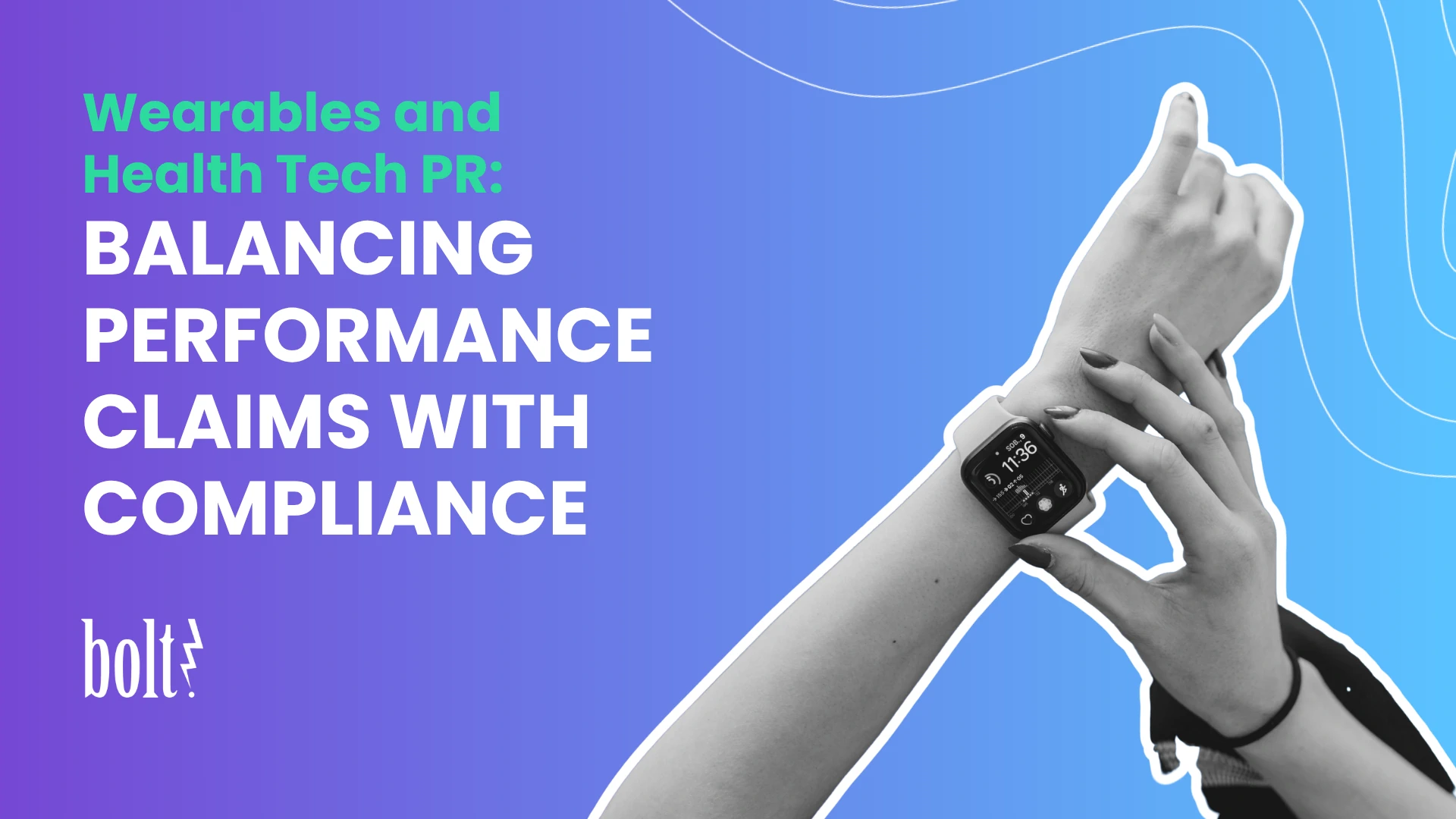
In the hyper-competitive world of health technology, data is the new currency. From smart rings that monitor sleep architecture to recovery tools using percussive therapy, brands are racing to prove their products don't just look sleek, but they actually work. However, for PR professionals, the line between a "performance claim" and a "medical claim" is razor-thin.
Marketing sports tech and biometrics requires a sophisticated dance: you must provide the evidence-backed stories journalists crave without inadvertently triggering a letter from the FDA or an investigation by the FTC. Balancing high-impact storytelling with rigorous compliance is no longer just a legal hurdle; it is a pillar of brand trust.
The primary challenge in wearables PR is managing the "Actionable Insight" vs. "Medical Advice" paradox. A smart ring can tell a user their heart rate variability (HRV) is low, but the moment the marketing copy suggests this indicates a specific heart condition, the product has crossed into medical device territory.
The 2026 update to the FDA’s General Wellness Guidance clarifies that noninvasive products measuring parameters like blood pressure, blood glucose, and oxygen saturation can qualify as wellness products, provided they are intended solely for wellness use and avoid disease-specific statements. To stay safe, PR teams must pivot from diagnostic language to educational language.
To capture the attention of top-tier health and tech journalists, you need more than a press release; you need a peer-reviewed foundation.
The FTC and FDA have become increasingly vocal about "health-washing," taking high-profile actions against companies making unsubstantiated claims regarding everything from weight loss to substance use disorders. To navigate this, the golden rule of health tech PR is simple: if you cannot point to a clinical study that specifically supports a claim, do not make it. This requires a disciplined approach to language, specifically avoiding "trigger" words such as "cure," "treat," "diagnose," and "prevent," which can instantly reclassify a wellness product as an unapproved medical device.
Beyond terminology, brands must embrace transparency as a core narrative pillar. The FTC strictly prohibits "bogus" testimonials or undisclosed ties between reviewers and the company, meaning all social proof must be authentic and clearly documented. Trust is further reinforced through technical integrity; under 2026 requirements, manufacturers must provide "reasonable assurance" of cybersecurity. This includes maintaining a proactive management plan for post-market vulnerabilities, transforming data security from a backend technicality into a front-facing promise of consumer safety.
Measuring the impact of a health tech campaign requires looking beyond vanity metrics to evaluate how well your narrative navigates the intersection of innovation and authority. Success starts with clinical integration tracking, where brands monitor whether their evidence-based insights are being cited by healthcare providers or integrated into actual clinical pathways. This shifts the focus from simple mentions to true industry adoption.
Furthermore, market differentiation remains a critical KPI. In a maturing market where nit shipments for smart rings and biometrics are growing rapidly year-over-year, your PR must successfully position your data quality as superior to competitors to avoid being categorized as a "toy." Finally, message compliance is a non-negotiable metric. Teams must actively monitor earned media coverage to ensure journalists are correctly framing the tool as a wellness device rather than an unauthorized medical device, effectively preventing regulatory "noise" before it starts.
At Bolt PR, we understand that in health tech, your reputation is your most important feature. We specialize in crafting "compliance-first" narratives that don't sacrifice the "wow" factor. Our team works at the intersection of clinical rigor and creative storytelling, ensuring your data-driven stories reach the right journalists without reaching the desk of a regulator.
We help brands navigate the complex transition from "cool gadget" to "essential health tool" through executive thought leadership, evidence-based media relations, and strategic content that educates the market while protecting the brand.
No, but your messaging must reflect its status. According to 2026 FDA guidance, certain noninvasive trackers can be marketed for wellness if they avoid diagnostic claims.
Strict brief management is essential. The FTC recently settled cases where marketers were barred from making "bogus health claims," and this includes claims made by paid endorsers.
Focus on the trend. Research shows that while adoption is rising, providers still hesitate to embrace technologies that fail to deliver compelling evidence of health benefits or cost-effectiveness.
Winning in the wearables space requires a commitment to the "long game." High-performance claims may drive short-term sales, but evidence-backed compliance builds a lasting brand. By anchoring your PR strategy in transparent data, educational storytelling, and a clear understanding of the "wellness vs. medical" divide, you can capture the headlines, and the market, without the regulatory risk.

Not sure where to start?
Contact our team to start the conversation around a customized marketing campaign dedicated to your personalized business goals. From PR to content creation and digital marketing, you tell us how far you want to take your brand, and we’ll do the rest.
We can’t wait to hear from you!





.png)


